

Vinyl plank flooring is a trending flooring option among homeowners these days. Even the floor contractors like it, as it offers high durability, moisture resistance, stylish appeal, and easy installation. Whether you remodel the living room, upgrade the kitchen décor, or outfit your basement, these vinyl planks allow for that hardwood charm without the need for high maintenance. The problem arises in achieving that clean, professional look for your vinyl plank floors. The right cutting is essential in this. So, the question most people ask is, what are the ideal tools to cut vinyl plank flooring?
This is the main focus of our instruction today; we’ll explain how to use the appropriate tools to produce the right cuts for tight seams and a perfect completed appearance. Stay with us, and you may find this useful for your do-it-yourself flooring installation jobs.
The Best Instruments for Cutting Vinyl Plank Flooring
To produce those exact cuts for vinyl plank floors, every flooring contractor, installer, or do-it-yourself enthusiast has to have these five pieces of equipment.
1. Straight cuts are best made with a utility knife.
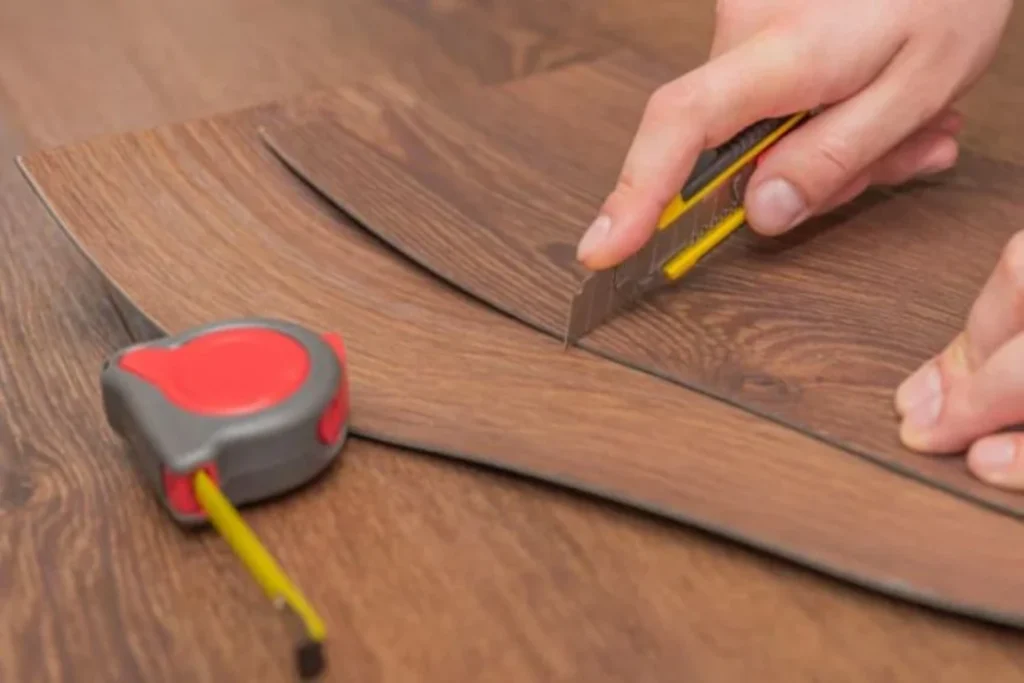
The simplest and most widely used tool for cutting vinyl boards is a sharp utility knife. With this tool, you may make straight cuts that result in those short board pieces. To cut the vinyl plank, you must draw the line with a pencil and a straightedge. Measure the plank first, then score along the measured line with the knife. Your plank should be bent back until it snaps cleanly along the scored line. Anyone may purchase this affordable tool, which makes it a perfect option for newbies wishing to make precise cuts. Be advised that it requires time to make such exact cuts and is not the greatest for large planks or bends.
2. Vinyl Plank Cutter: Dust-free, quiet, and clean

The vinyl plank cutter, often known as a laminate cutter, comes next. The appearance of this instrument is similar to that of a standard paper cutter, but it is much more powerful and made for thicker materials. Simply pull down on the handle once your plank and the cutter’s blade are perfectly aligned. Without using electricity, you may obtain quick, clean cuts with no noise. Additionally, there won’t be any dust or trash. Once more, it is best suited for making straight cuts rather than intricate forms or angles. Although it will be a one-time expenditure, it is somewhat expensive
3. Jigsaw: Ideal for Custom Cuts and Curves
It will be necessary to cut the vinyl boards for the corners, door frames, and pipes. For these cuts, a jigsaw is the perfect tool. You can create precise cuts for odd angles and curves with this tool’s small blade. You must first create a cut line and hold your plank firmly in place before using it. Now move the jigsaw carefully down the line after using the fine-toothed blade for the board. For curved, unique cuts for various floor shapes, this tool is the best option. If you have exact control over the tool, there won’t be much chipping. Indeed, it will require electricity and produce some noise and dust. It is preferable to buy a jigsaw with a high-quality blade to prevent any fraying or melting edges.
Visit Us: How To Block Light From The Top & Sides of Curtains?
4. Mitre Saw: Perfect for Cross and Angled Cuts
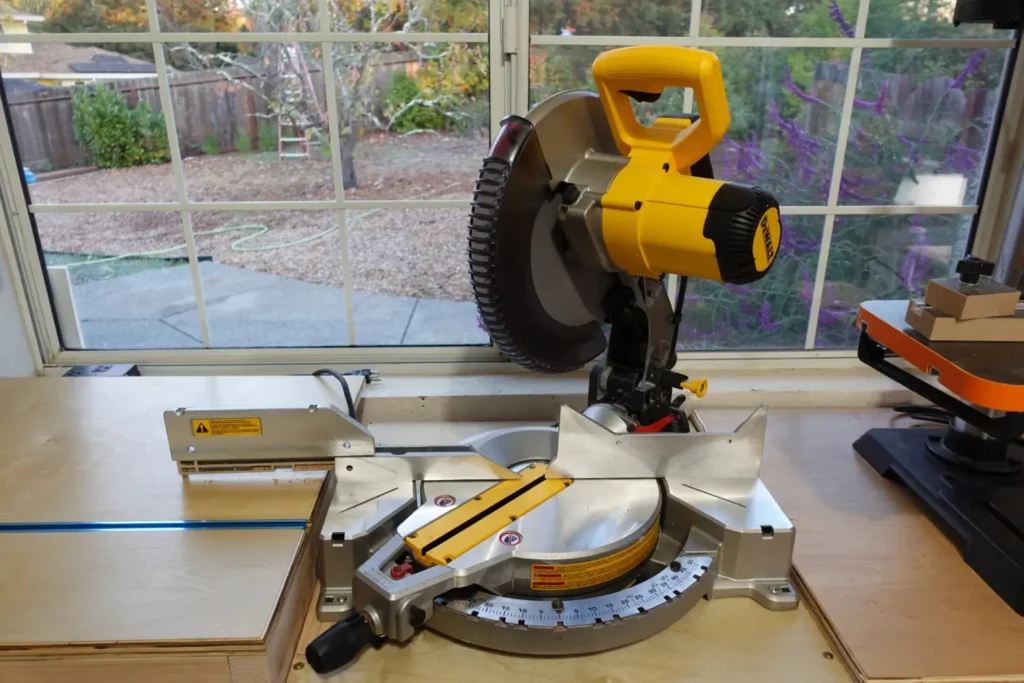
If the room where the vinyl flooring planks are to be put has sloped walls, a precise angled cut is necessary. An effective tool for that would be a miter saw. Measure the angle first, then modify your mitre saw according to those specifications. To cut along the scored measures, drop the blade while holding the wood firmly in place. With it, you can quickly and precisely produce the ideal cuts for strange corners. The finest thing is that you will be able to cut numerous planks at one time. For safety reasons, it is advised to use it in a workshop because it is somewhat heavy.
5. Circular Saw: For Straight, Extended Cuts
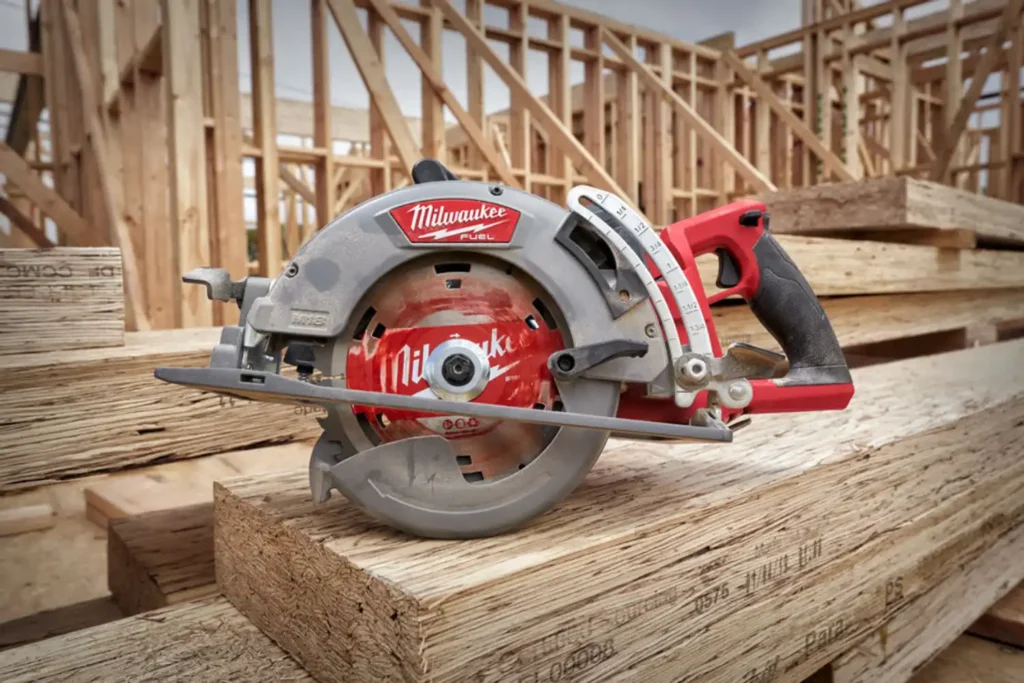
If you need to cut several planks at once, the circular saw is the best choice because it expedites the procedure. It is helpful when utility knives or manual cutting instruments slow down. Cut the line where the cut needs to be made after clamping the board to a suitable workbench. Now move the circular saw across the pre-cut line to make a straight edge. It works well for thicker planks and is appropriate for long, straight cuts with high speed performance. Note that it is not suitable for small-scale tasks and requires experience to use safely.
Advice for a Perfect Finish
Regardless of the best tools for cutting vinyl plank flooring, there are a few things you should remember when utilising them. These pointers are:
✔. Make it a habit to measure twice to be certain and cut once; accuracy will be crucial in this situation.
✔. To create precise, crisp lines, spin the board to make straight-edge cuts rather than curved ones.
✔. Use a pencil or chalk to mark your measurements for the cutting.
✔. When using electricity-powered cutting tools, wearing safety glasses is strongly advised.
Learn More: Top 10 Reasons To Choose Wool Carpet For The Living Room
Which Tool Is Best for You?
Here is a breakdown for you on which tool is best based on your individual skill level for vinyl plank flooring installation.
| User Type | Recommended Tool(s) |
| Beginner | Utility Knife, Vinyl Plank Cutter |
| Experienced | Jigsaw |
| Contractor/Pro | Miter Saw, Circular Saw, All Tools |
| Small Room Project | Utility Knife, Vinyl Cutter |
| Complex Layout Room | Jigsaw, Miter Saw, |
Final Thoughts
Choosing the right cutting tools for vinyl plank flooring doesn’t have to be difficult. All you need for the flooring projects is a basic awareness of your needs and skill level. You can create those precise, clean cuts if you have the proper cutting instrument. A faultless, expert installation is guaranteed by a smooth, well-cut vinyl flooring board.





Leave a Comment